
EPS foam ocean pollution and food chain poisoning let us fully realize the importance of EPS recycling.
Studies have shown that EPS foam will be ingested by marine organisms after degradation in seawater, and the styrene monomer produced is toxic. This directly leads to the fact that those creatures that fill their stomachs with foamy garbage can’t get enough food and nutrition, and even harm their health. What’s worse, some of these sea creatures will enter the human food chain directly.
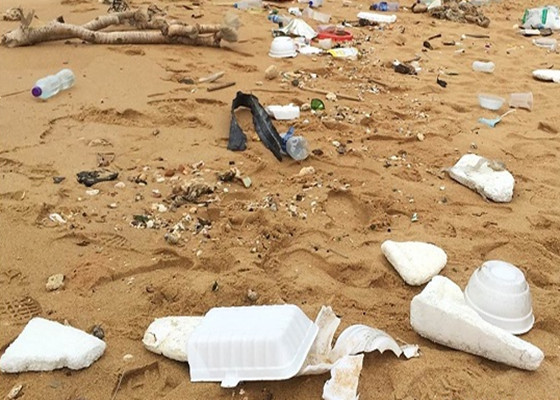
It is true that the treatment of EPS foam in the ocean is more difficult than that of ordinary foam garbage, but we can effectively dispose the foam waste before it enters the ocean. The effective treatment mentioned here does not refer to incineration or landfill, but to use professional foam densifier to recycle it. This solution effectively solves our marine pollution problem.
Nowadays, the scale of EPS recycling in the world is growing, thanks to professional foam densifier equipment. The GREENMAX foam densifier crushes, melts and extrudes the loose foam into dense ingots, which is convenient for storage and transportation, and is also easier for later foam granulation. The processed foam ingots will be used as raw materials for new foam products, and continue to flow to the market and our lives.
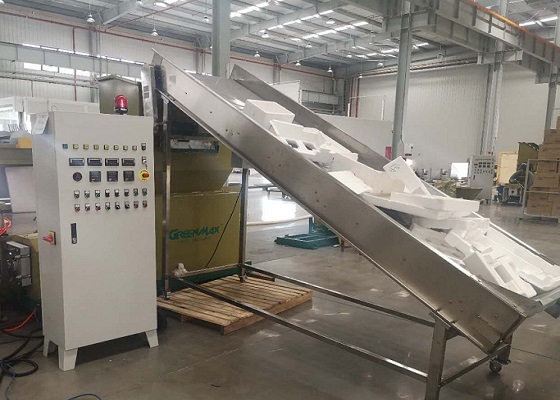
GREENMAX EPS densifier is an effective technology in the field of EPS recycling. In Europe and the United States, many companies, such as foam producers, cutters, logistics companies, and professional recyclers, can see compressed foam everywhere in their warehouses. These compressed foam wastes can be sold at high prices to the renewable product manufacturing industry, which is one of their sources of economic income.