
Expanded polystyrene is widely used around ports, fishing vessels, seafood facilities and marinas because it is lightweight, insulating and buoyant. These properties make EPS useful for fish boxes, buoys and floating structures, but they also allow damaged pieces to spread quickly across the water.
Once EPS breaks into small fragments, collection becomes far more time-consuming. The most practical approach is therefore to recover damaged products at ports, fishing facilities and marinas before the foam reaches open water, then prepare the collected material for EPS recycling.
Common uses of EPS at sea:
Buoys-sometimes covered with hard plastic. If this hard plastic becomes brittle and breaks with the passage of time, the foamed polystyrene core will be quickly blown into small puffed blocks by waves, wind and animals.
Fish Boxes-These boxes help keep the catch fresh and cold while fishing. However, on deck, even slight winds can lift lids on board, which explains why these lids are often found at sea.
Dock platform-EPS is very light and can form a floating platform for seafarers so that they can reach moored vessels. Severe storms can also split them apart, as was the case with Holyhead Marina in 2018, covering the water with EPS confetti.

EPS is the first completely invented material. Only half a century later, EPS pollution has caused pollution worldwide. In recent years, many countries and states have banned or restricted the use, production or import of EPS food contact products, such as takeaway containers and cups, but the EPS waste that has been generated requires EPS recycling.
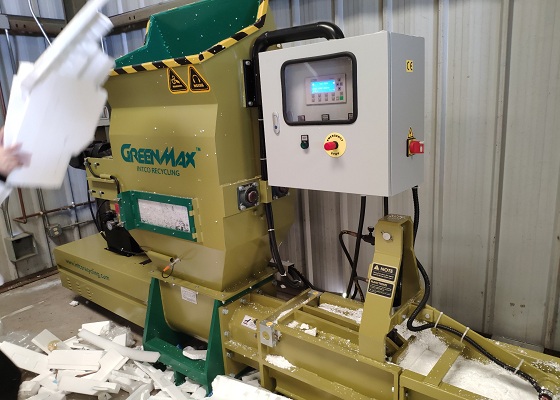
GREENMAX EPS compactor developed by INTCO Recycling Company can squeeze out the air content in the EPS at a ratio of 50: 1, and finally produce a compact EPS block, which greatly improves the storage and transportation efficiency.
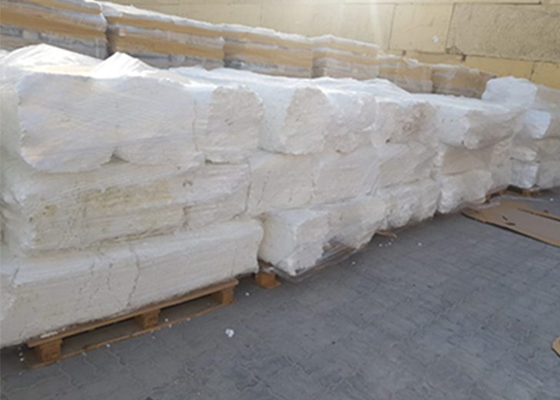
EPS block is also popular in end markets such as photo frames, wood-like materials, and hangers. The sale of EPS block into profit has already become one of the profit methods of recyclers.
EPS recycling is used to process the pollution that has been generated. This is our most suitable way to save the environment.