
Expanded Polystyrene (EPS) has long been valued for its lightweight, protective, and cost-effective properties. However, managing EPS waste has become a growing challenge for businesses worldwide. As sustainability becomes a priority, more companies are adopting EPS recycling solutions to reduce environmental impact while improving operational efficiency.
One of the biggest challenges of EPS is that it consists of approximately 98% air. Although this makes EPS inexpensive to manufacture and ideal for packaging, it also makes transportation and storage extremely inefficient. Large volumes of lightweight EPS require significant warehouse space and increase logistics costs, making traditional expanded polystyrene recycling financially unattractive for many companies.
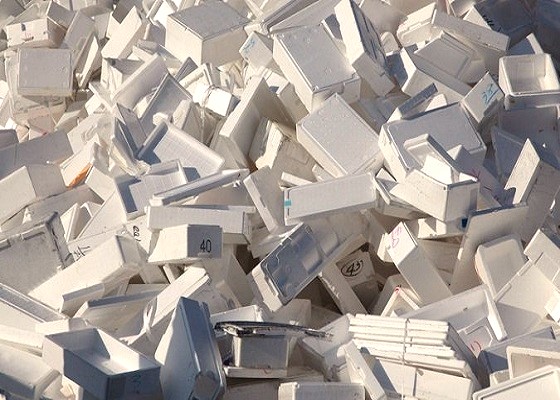
For years, the high cost of collecting, transporting, and recycling EPS led many businesses to send discarded foam to landfills instead of recycling it. As a result, substantial amounts of EPS waste have accumulated in landfills and, in some cases, entered oceans and waterways, contributing to global plastic pollution. Increasing corporate participation in EPS recycling is therefore critical to reducing environmental waste.
Today, this situation is beginning to change. Growing consumer awareness and stricter sustainability goals are encouraging companies to rethink how they manage packaging materials. At the same time, advances in recycling technology are helping businesses overcome the economic barriers that once limited EPS recycling programs.
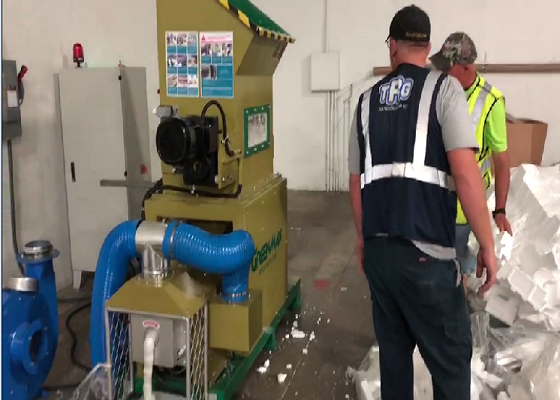
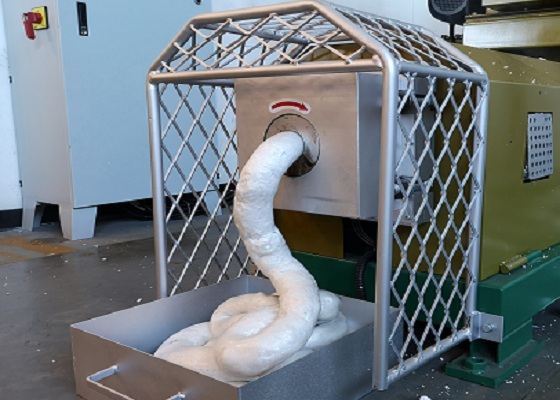
EPS densifier, which dramatically improves recycling efficiency. INTCO Recycling has developed GREENMAX foam densifier capable of compressing foam at a 90:1 ratio. Lightweight EPS is transformed into dense, compact ingots that require far less storage space and significantly reduce transportation costs, making large-scale EPS recycling much more practical.
Even more importantly, these compressed EPS ingots have commercial value. Instead of being treated as waste, they become recyclable raw materials that can be sold and reused in manufacturing new products. This creates a circular business model where companies not only reduce disposal costs but also generate additional revenue from recyclable materials, making EPS recycling both environmentally and economically sustainable.
As consumers continue to support brands that embrace the circular economy, businesses are under increasing pressure to reduce plastic waste and improve sustainability. Investing in advanced EPS recycling equipment enables companies to lower their environmental footprint, improve resource efficiency, and meet growing market expectations. By turning EPS waste into valuable resources, businesses play a vital role in building a more sustainable future.
FAQ
- Why is EPS difficult to recycle?
EPS is made of about 98% air, making it bulky and expensive to store and transport. This has traditionally increased recycling costs. - What does an EPS densifier do?
An EPS densifier compresses EPS foam by up to 90:1, reducing its volume for easier transportation and recycling. - How does EPS recycling benefit businesses?
EPS recycling helps businesses reduce costs, minimize waste, support sustainability goals, and create value from recycled materials.