
The EPS industry has developed collection infrastructure at more than 200 collection sites nationwide to support recycling. As of 2023, expanded polystyrene (EPS) recycling has seen notable global progress, with over 168 million pounds of EPS transport packaging diverted from landfills in North America alone—61 million pounds of which came from post-consumer sources—resulting in a regional recycling rate of 31%.
Globally, EPS recycling programs are now active in 72 countries, with standout rates such as 88% in South Korea, 83% in Taiwan, 68% in Japan, and 46% in China. Recognized by the United Nations Environment Programme as one of six materials recycled at scale and in practice, EPS has benefitted from over $185 million in industry investments aimed at incorporating post-consumer material into new products, with a combined capacity exceeding 229 million pounds across North America and planned expansions. These figures reflect significant advancements from 2016, when EPS recycling totaled just 118 million pounds with a 15% recycling rate, solidifying EPS as one of the most recycled plastic forms today.
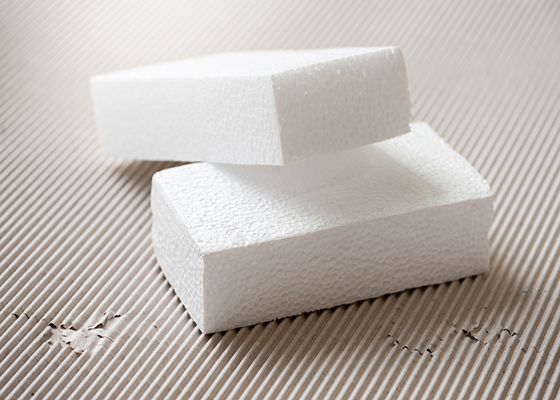
EPS recycling has gone a lot of difficulties for some internal and external reasons.
The reason that EPS isn’t allowed in recycle bins is that it is contamination. It is often contaminated by food or drink, and it is difficult to clean because there are many holes. It takes a lot of human and material resources to clean it, and this will increase their recycling costs. So most of the recyclers think that polystyrene recycling is unprofitable.
Another reason is that EPS foam is 98% air so it is not cost-effective to store or transport. So volume reduction is a very important step for EPS recycling. However, most of the recyclers don’t have professional machines to recycle waste EPS due to the lack of technology in the early time. But in recent years, EPS compactors with volume compression function have come out.
GRENNMAX EPS compactor is a professional machine for EPS waste disposal. It has been popular in some regions of the United States and Europe. The main function of the EPS compactor is crushing and compressing. It can reduce the foam volume at a ratio of 50:1, this provides a good solution to your transportation problem.
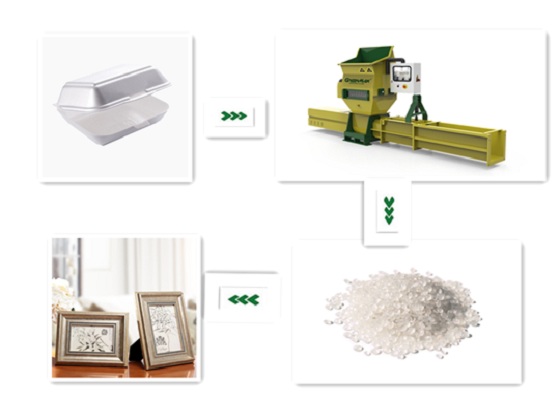
The recycled EPS material can be used to make beautiful photo frames or other new products. This is a good way to reuse resources, and GREENMAX can help us save more than 3 millions of trees a year. We hope to have a greener world with the wider applications of GREENMAX EPS compactor.