
Despite the upbeat outlook for demand for recycled EPS, business constraints still remain. For example, the collapse in oil prices affected earnings per share, but the relationship between the two is very complex. With crude oil prices falling benzene a key EPS feedstock has also seen a significant decline since its peak in July 2014.
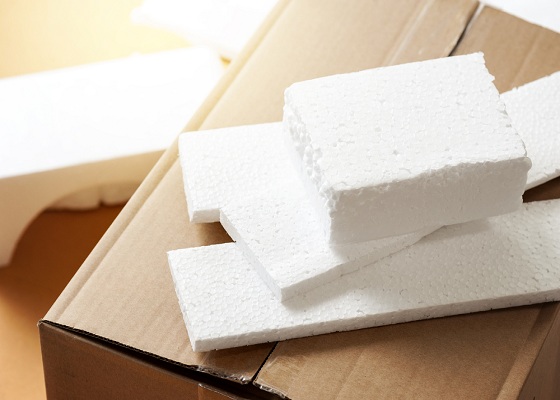
Non-biodegradable quotient of polymers is one of the most important problems about limiting the industrial expansion of polystyrene. Today, people are more aware of the environmental pollution of any synthetic product. In response to this fact, some governments and private companies are organizing campaigns to educate people about the environmental impact EPS waste and the benefits of using renewable alternatives for synthetic products, which will greatly affect the EPS markets.
These factors have compelled several PS and EPS industry players to look out for options that are environmentally viable. The fact that these EPS waste is 100% recyclable and has led several companies to focus on upgrading their recycling facilities to lower the impact of PS and EPS products on the environment.
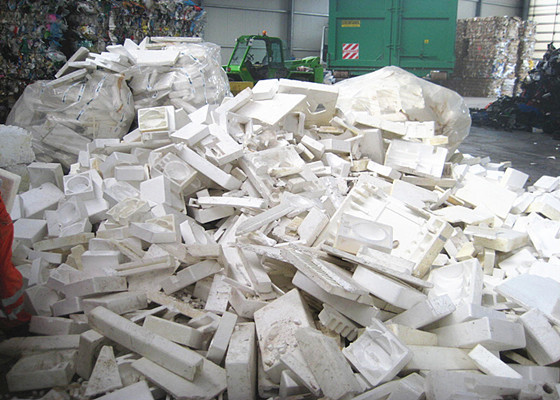
The start-up cost of EPS recycling is also an impediment to the pursuit of the material by private companies and local governments. As the main equipment of EPS recycling industry, the prime cost of an EPS densifier is between $20, 000 and $30, 000 in general. EPS is about 98% of air and has “memory”; if its adhesive is not completely destroyed by air purging, it will rebound back to the original product form. A standard baler or compactor can crush the EPS to a certain degree, but it will not be treated as thoroughly as a densifier with a compression ratio of up to 90:1.

In addition to machine costs, recyclers need to consider the cost of transportation. The lightweight and bulky material takes up a lot of space when transport, thus resulting some recyclers refuse to recycle EPS.