
In the United States, California and New York have passed legislation prohibiting disposable EPS bags. EPS bags are also banned in Hawaii’s densely populated counties. These two states have always been excellent models of EPS processing in the United States, treating recyclable EPS and disposable EPS with separate attitudes.
Most EPS are used only once in a few minutes and then thrown away or otherwise discarded into the environment. Because EPS are not biodegradable, they can last for hundreds of years in landfills or as garbage in the natural environment.
EPS can eventually break down into tiny pieces called microelasticity, which can cause other less obvious threats. For example, microEPS are found in Champlain Lake, tap water around the world, 90% bottled water, sea salt, beer, fish, shellfish and other forms of wildlife. Hundreds of thousands of birds and marine animals die each year due to discarded EPS.
In fact, EPS can basically be recycled. Some EPS are made into disposable EPS because they are made into disposable products and recycling is extremely difficult. However, for other EPS products, such as fish boxes, pressure plates, etc., recycling is convenient and is not prohibited.

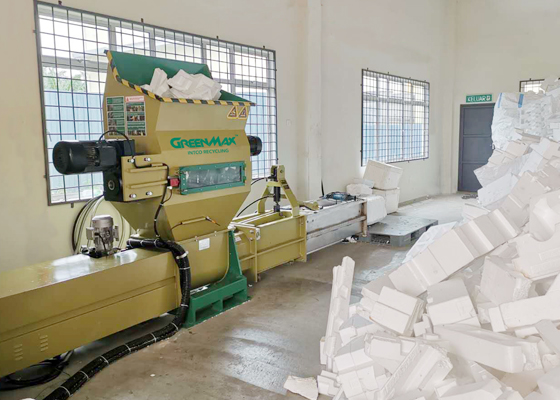
For EPS that can be recycled, you need to find INTCO Recycling, a recycling specialist who sells recycling machines and provides customers with a complete EPS recycling program. The manufacturer chose to purchase the polystyrene compactor, which is specially used to recover the cutting waste of the insulation board. The recycling machine can compress the EPS in a ratio of 50:1, and compress the large piece of EPS waste into a dense recycled EPS block, which saves the payment. The cost to the recycler also increases the efficiency of the transport.
On the one hand, it is forbidden to recycle difficult EPS. On the one hand, it is necessary to recycle recyclable EPS. This is a good way to solve EPS pollution.