
EPS, shorted for expanded polystyrene is a cheap, lightweight and durable material that can be easily molded into a variety of products for a wide range of applications. As a result, the production of EPS material has increased significantly over the past 60 years.
However, the current level of EPS use and disposal can create some environmental problems. About 4% of the world’s oil and gas production is non-renewable, used as EPS material, and another 3%-4% is used to provide energy for its manufacture. The major portion of the EPS produced each year is used to make single-use packaging items or other short-lived products discarded within a year of manufacture. These two observations suggest that our current use of EPS is unsustainable.

Recycling is one of the most important actions available to reduce these impacts. Recycling provides an opportunity to reduce oil use, carbon dioxide emissions and the amount of waste that needs to be disposed of.
Due to the fact that EPS is so bulky in size, it takes up a lot of spaces and costs much during the recycling process. Always combined with the constant mixing of items like food, EPS is considered to be one of the hardest materials to recycle, and EPS recycling has also proved to be uneconomic.

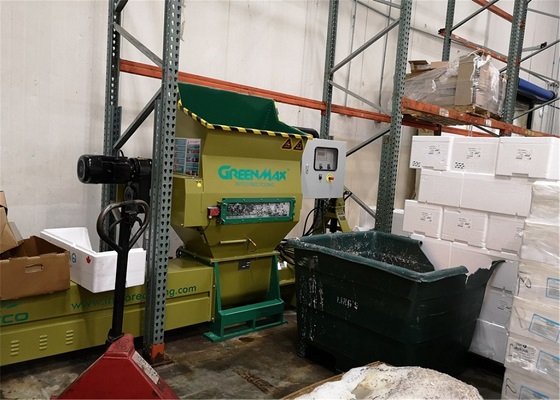
As an EPS recycling specialist. GREENMAX EPS compactor is designed for waste foam recycling by the INTCO recycling. INTCO recycling produced this machine to meet its own demand for EPS waste at the at the beginning, but it has been soon become popular around the world. With the crushing and compressing performance, GREENMAX can reduce the foam volume at a ratio of 50:1, so the transportation costs are greatly saved, and EPS recycling will be not so difficulties as before.
The benefits and difficulties of recycling EPS foam are a good example of the complex problems that can arise as we look for ways to save resources and protect the environment. As for our EPS recycling work, we are making efforts and tying to make it better.