
Seafood processors, fish markets and distributors generate used EPS fish boxes every day. Once emptied, these boxes still occupy considerable space, while residual water and fish waste can make storage unpleasant. A GREENMAX EPS compactor reduces their volume on site, turning loose boxes into dense blocks that are easier to store, transport and send for recycling.

Expanded polystyrene provides lightweight insulation that helps maintain seafood temperatures during storage and transportation. After use, however, the same low-density structure becomes a handling problem. Empty boxes fill collection bins and vehicles quickly, so businesses may pay to move large volumes of material with relatively little weight.
EPS fish box recycling starts with keeping the boxes separate from general waste. Fish residues and loose ice should be removed, and excess water allowed to drain before processing. The cleanliness of the material affects both site hygiene and acceptance by downstream recyclers. Compaction reduces the space required, but it does not replace cleaning where cleaning is necessary.
How GREENMAX EPS Compactor Processes Fish Boxes
GREENMAX EPS compactor first crushes the boxes into smaller pieces, then uses screw pressure to compress them into blocks without heating. The APOLO series offers a volume reduction ratio of up to 50:1, depending on the incoming foam. This allows more EPS to be stored in the same area and increases the amount that can be collected in each load.
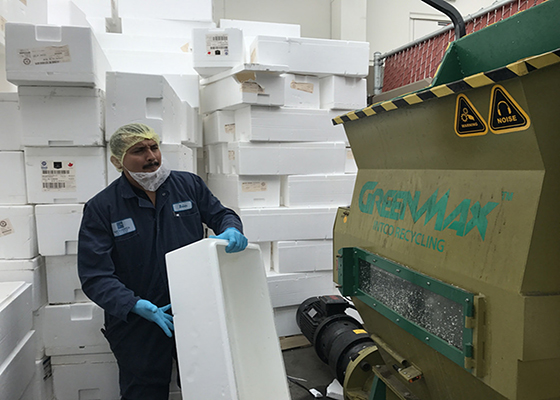
For seafood operations handling wet boxes, GREENMAX can provide a configuration with a stainless-steel discharge outlet. Equipment selection should account for moisture, exposure to saltwater, box dimensions and the quantity generated during busy periods. The machine should also fit the route between the unpacking area, waste collection point and block storage area.
A fish market processing boxes throughout the day may need a different feeding arrangement from a seafood distributor collecting them at the end of a shift. Matching capacity to the actual workload helps prevent loose boxes from accumulating while avoiding unnecessary equipment size.
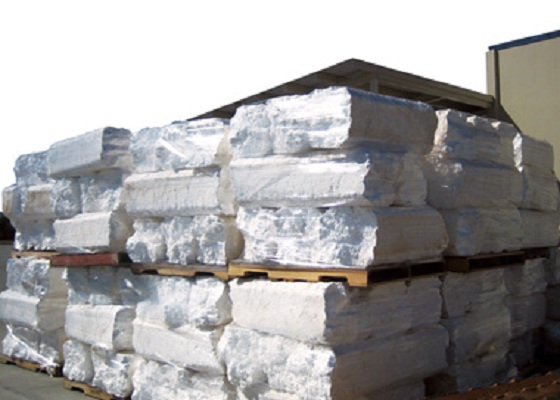
From Compacted Fish Boxes to Recycled Material
Compacted EPS blocks are easier to stack, weigh and load than loose fish boxes. Once accepted by a recycler, suitable material can be processed into recycled polystyrene pellets for manufacturing new products. Keeping the blocks clean and separate from other waste helps preserve their value.
INTCO Recycling can assess purchasing cooperation for compacted EPS blocks based on material quality, quantity, location and current demand. Businesses planning an EPS fish box recycling operation should confirm the outlet’s requirements alongside machine selection, so the compressed material has a clear route to further processing.
FAQ
1. Can wet EPS fish boxes be compacted?
Yes. A suitably configured EPS compactor can process drained fish boxes with residual moisture. Fish waste and loose ice should be removed beforehand, and the equipment configuration should match the working environment.
2. Does the compactor melt the fish boxes?
GREENMAX APOLO EPS compactor uses mechanical pressure without heating to produce compressed blocks.
3. Can compacted EPS fish boxes be sold?
Suitable blocks may have value to recyclers. Acceptance and pricing depend on cleanliness, moisture, quantity and transportation costs. Confirm the buyer’s requirements before starting regular production.