
EPS foam can not only be used as packaging for home appliances, take-out meal boxes, etc., which has been widely used in our daily life, but also in building projects, such as external wall insulation and road construction.

Recently, a crack has appeared in the eastbound lane of US route 36, which connects the crowded cities of boulder and Denver in the US state of Colorado. The repair of this project is attributed to EPS foam. In just 20 days, six Insulfoam EPS factories manufactured and coordinated logistics, delivering more than 200 trucks loaded with more than 6,000 pieces of geofoam during the busiest months of the year. Shortly after installation, U.S. route 36 was fully operational.
According to CDOT, engineers designated “geofoam” because it is very strong, which means it can safely support highway loads and improve slope stability. Of the different options being considered, EPS geofoam provides the best safety guarantees.

One of the main features of EPS foam is its ultralight properties compared to other fillers. So we often find foamed peanuts in fragile packaging, and similarly, EPS is an excellent filler for building applications.
Although EPS foam is very light, it has a better bearing capacity than most foundation soils. At 1% strain, the material has a compressive strength of approximately 317 to 2,678 pounds per square foot. As long as the combined constant/live load does not exceed 1% of the strain, the material will not creep or yield plastically.
EPS foam clods provide another advantage: uniformity. This is not the case for soil and other filling materials, whose variable, inconsistent composition can lead to uneven load transfer and settlement.
According to the EPS industry alliance, the light load of EPS geotechnical foam can reduce stress while avoiding construction problems caused by deformation. Or, as CDOT puts it, “because the geofoam is lightweight, it reduces the pressure and stress on the subsurface soil.”
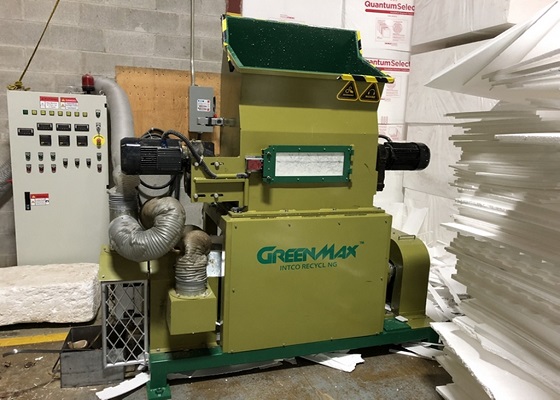
EPS is recyclable, EPS recycling is now accepted by more and more companies and industries. With the expansion of EPS applications, the material should be recycled effectively.