
Recently, the demand for alternatives to foam takeout food containers has been growing due to the difficulties for EPS waste recycling.
As we know, most of the single-used food containers are made of PS material. Although such material like EPS is recyclable, but it is considered uneconomical by most recyclers. So there are still a lot of difficulties for PS foam containers recycling currently.

According to statistics, there are nearly 256 million take-outs each day in 2016, of which at least 256 million foam food containers and plastic bags are produced. These used containers will take over 470 years to degrade naturally. In addition to incineration, about 8 million tons of plastic are dumped into the sea every year.
At present, many EPS material used on the market are labeled with “degradable”, which mistakes people that these plastic foams can eventually be degraded in the environment, it is green and harmless. In fact, experts said that biodegradable plastics like EPS will not degrade naturally and it will cause lasting pollution to our environment, especially the marine environment.
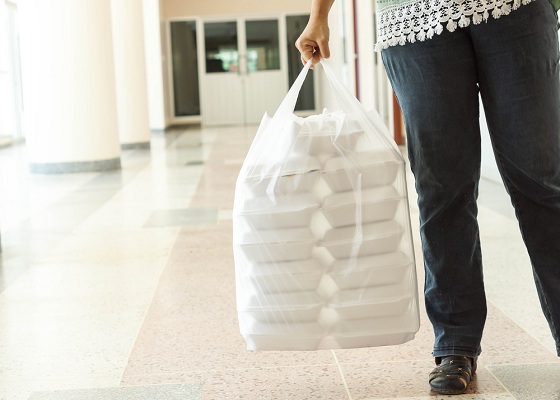
Actually, EPS material is recyclable, but the recycling rate of EPS food containers is extremely low, and most of then are ended in landfill. Why does the recyclable foam food containers eventually be disposed of as garbage?
There are two main reasons. One is that the dirty surface makes it not accepted by some recyclers. Waste sorting and cleaning require a lot of investment, which proves to be uneconomical. Another is also the most important reason, waste foam food containers are too bulky to transport, thus cost much money.
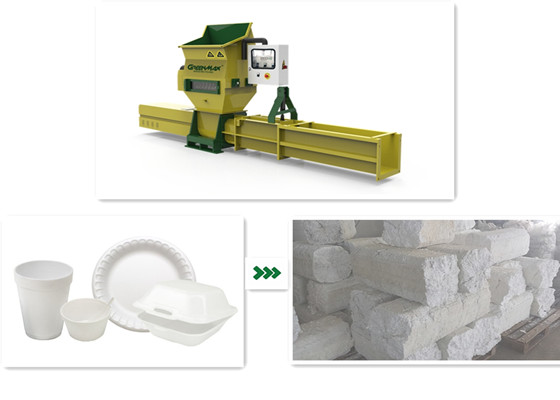
INTCO, a EPS recycling company can provide you with professional foam volume reduction machines. The GREENMAX EPS compactor can realize foam volume reduction at a ratio of 50:1 with simple process by crushing and compacting. The compacted EPS blocks will save much transportation cost for you.
The advantages of a material are always relative, EPS has brought great convenience to our life and gradually become dependent on people. EPS recycling still has a long way to go.